210 Cactus Succulent Procreate Stamps: A Practical Evaluation for Digital Artists
In the landscape of digital illustration, efficiency often competes with the desire for unique, hand-crafted aesthetics. For artists working within the Procreate ecosystem on iPad, the 210 Cactus Succulent Procreate Stamps bundle represents a specific solution to this tension. This resource is not merely a collection of images; it is a structured set of 210 distinct brush stamps designed to streamline the creation of botanical and desert-themed artwork. Understanding what makes this specific bundle distinct requires looking beyond the sheer volume of assets and examining how they function within a professional workflow compared to other available tools.
Understanding the Composition and Scope
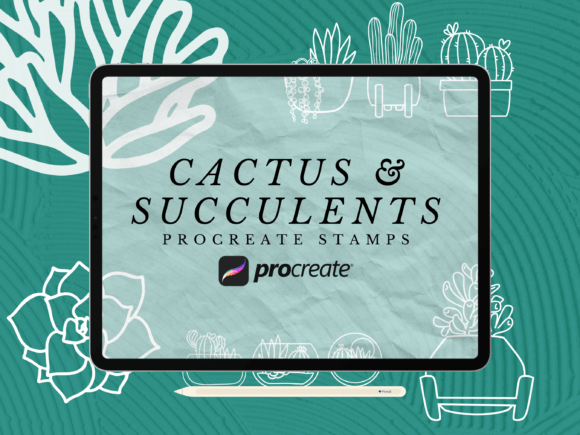
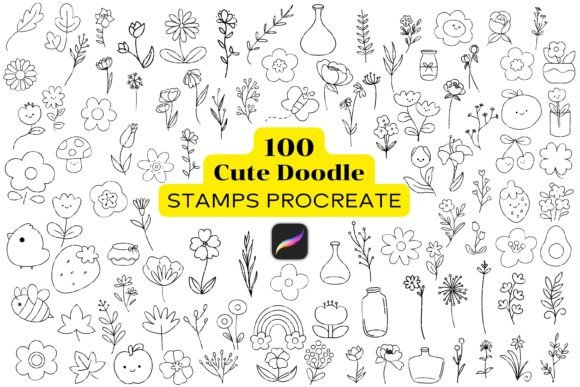
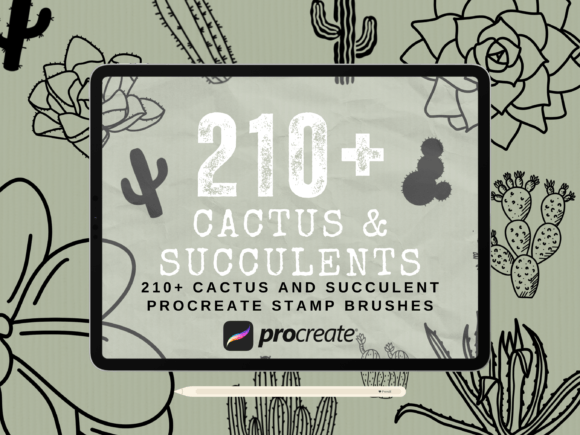
The core value proposition of the 210 Cactus Succulent Procreate Stamps lies in its comprehensive categorization. Rather than a random assortment of icons, this bundle aggregates four distinct collections into a single package: 42 Cactus and Succulents Stamps, 50 Cactus Stamps, 78 Doodle Cactuses, and 50 Succulents Stamps. This segmentation is significant for artists who need variety without sacrificing thematic consistency. The inclusion of doodle-style cacti alongside more detailed succulent illustrations allows for a range of stylistic applications, from whimsical greeting cards to more serious pattern designs.
Each stamp within this set is a hand-drawn illustration, ensuring that the final output retains an organic feel despite being a digital asset. The collection extends beyond individual plants to include desert scenes and landscapes, providing context for compositions that require background elements. With over 210 images in total, the library is substantial enough to prevent repetitive patterns in large-scale projects like fabric design or wallpaper textures. However, the utility of these assets depends heavily on the user's specific project requirements and their proficiency with digital brush engines.
Technical Specifications and Compatibility
A critical factor in evaluating the 210 Cactus Succulent Procreate Stamps is the technical nature of the brushes themselves. These are non-pressure sensitive brushes. This characteristic is a defining feature that separates them from standard drawing brushes or vector-based clip art. Because they are non-pressure sensitive, the opacity and size of the stamp remain constant regardless of how hard or soft the user presses on the screen. This ensures a consistent image every time the tool is used, which is essential for creating uniform patterns, logos, and signage where visual repetition must be exact.
Furthermore, this technical specification expands accessibility. Since the brushes do not rely on pressure sensitivity data, they can be used effectively without an Apple Pencil. Users can operate these stamps using their fingers or basic styluses that lack pressure capabilities. While this increases the potential user base, it also introduces a tradeoff regarding artistic nuance. Artists accustomed to dynamic line weights and pressure-controlled shading may find the static nature of these stamps limiting if they are attempting to create hyper-realistic renderings. For most commercial applications, however, such as apparel prints or greeting cards, the consistency offered by non-pressure sensitive stamps is a distinct advantage.
Comparing Stamp Bundles to Traditional Drawing Methods
When considering whether to utilize the 210 Cactus Succulent Procreate Stamps, it is necessary to compare this approach against traditional digital drawing methods. Creating botanical illustrations from scratch in Procreate offers unlimited customization. An artist can draw a cactus with infinite variation in shape, lighting, and texture. In contrast, using a stamp bundle limits the artist to pre-defined shapes. The decision between these two approaches often hinges on the balance between time investment and creative control.
For projects requiring rapid prototyping or high-volume production, the stamp method is superior. If a designer needs to generate ten variations of a t-shirt print featuring different cactus arrangements, manually drawing each plant would consume hours. Using the 210 Cactus Succulent Procreate Stamps reduces this process to minutes. The artist can simply place, rotate, and scale the stamps to achieve the desired composition. However, for fine art pieces where every curve and shadow must be meticulously crafted to convey a specific mood, the rigidity of a stamp set may feel restrictive. In such cases, the bundle serves better as a reference or a starting point rather than the final execution tool.
Evaluation Against Vector Assets and Clip Art
Another common alternative to brush stamps is the use of vector files (SVG or AI) or raster clip art (PNG). Vector graphics offer scalability without quality loss, making them ideal for large-format printing like billboards or banners. The 210 Cactus Succulent Procreate Stamps, being raster-based brushes, have resolution limits inherent to the Procreate canvas settings. If a project demands extreme scaling, vectors might be the safer choice. Conversely, the stamp format integrates seamlessly into the painting workflow. Unlike importing PNGs, which creates separate layers and objects, stamps become part of the paint layer immediately, allowing for blending modes, masking, and texturing effects that are difficult to apply to imported images.
The "hand-drawn" aesthetic of the stamps also distinguishes them from the often sterile look of generic clip art. Many free or low-cost clip art libraries suffer from a flat, computer-generated appearance. The illustrations in this bundle retain the imperfections and character of human drawing, which is crucial for branding that aims to appear artisanal or boutique. When comparing the 210 Cactus Succulent Procreate Stamps to generic clip art, the primary differentiator is the cohesive style across all 210 assets, ensuring that a logo, a pattern, and a social media graphic all feel like they belong to the same brand identity.
Best-Fit Situations and Use Cases
Determining when the 210 Cactus Succulent Procreate Stamps is the right tool involves analyzing the intended output. This bundle excels in scenarios where consistency and speed are paramount. It is particularly well-suited for:
- Pattern Design: Creating seamless repeats for textiles, wrapping paper, or digital backgrounds requires identical elements placed at regular intervals. The non-pressure sensitive nature of these stamps guarantees that every repeat looks exactly the same.
- Greeting Cards and Stationery: These items often benefit from a charming, illustrative style. The doodle and succulent collections provide ready-made motifs that fit the aesthetic of handmade stationery without the time cost of drawing them individually.
- Apparel and Merchandise: For T-shirts, tote bags, and mugs, designers often need to test multiple layouts quickly. The ability to drag and drop stamps allows for rapid iteration of design concepts before committing to a final layout.
- Logo Concepts: While a final logo usually requires vectorization, these stamps can serve as excellent mood boards or sketch references to explore different cactus silhouettes and compositions.
Limitations and Decision Factors
Despite their versatility, there are situations where this bundle may not be the optimal choice. If a project requires photorealism, the illustrative style of the 210 Cactus Succulent Procreate Stamps will not suffice. Similarly, if the design brief demands a highly specific species of cactus that is not included in the 210-image library, the artist will need to supplement the bundle with custom work. Additionally, because the file is compatible only with Procreate, artists working in Adobe Fresco, Affinity Designer, or desktop software like Photoshop cannot use these assets directly. They would need to export the stamps as images first, which adds an extra step to the workflow and potentially degrades the quality depending on the export settings.
Cost-effectiveness is another consideration. While purchasing the full bundle of 210 stamps is generally more economical than buying the four individual collections separately, users should evaluate whether they need all four categories. If a project focuses solely on succulents, purchasing the specific 50 Succulents Stamps collection might be a more targeted investment. However, for artists building a long-term asset library, the bundled approach offers greater variety and future-proofing for diverse projects.
Strategic Integration into a Workflow
To maximize the utility of the 210 Cactus Succulent Procreate Stamps, artists should integrate them strategically rather than relying on them exclusively. A hybrid approach often yields the best results. For instance, an artist might use the stamps to lay out the primary composition of a pattern, then switch to a pressure-sensitive brush to add shading, highlights, or environmental details like sand and sky. This method leverages the speed of the stamps while maintaining the artistic depth of manual drawing.
The non-pressure sensitive feature also encourages experimentation with layering. Since the opacity does not change with pressure, artists can stack stamps to create depth through color blending rather than stroke weight. By adjusting the blend modes in Procreate, the static nature of the stamps can be transformed into complex, textured visuals. This flexibility makes the bundle a powerful component of a broader digital art toolkit, provided the user understands its constraints and strengths.
Ultimately, the decision to adopt the 210 Cactus Succulent Procreate Stamps depends on the specific goals of the project. For those seeking a balance between hand-drawn charm and production efficiency, particularly within the realm of commercial design and pattern creation, this bundle offers a robust solution. It removes the barrier of drawing complex botanical forms from scratch, allowing creativity to focus on composition and color rather than the mechanics of rendering. By understanding the tradeoffs between automation and manual control, artists can determine if this resource aligns with their workflow or if a different approach better suits their vision.